Video deep dive · language2020-05-26 · 6 years ago

Gay Japanese Slang Lesson: Top, Bottom, Vers

The Brief

A scrappy living-room explainer on Japanese gay position slang that out-engaged the algorithm through sheer niche precision — this audience found exactly what it came for.

3.7% engagement on 23,489 views is strong for a 2020 educational video, and the top comment (26 likes) skips the lesson entirely to riff on 'neko' as a stray cat metaphor — the audience came to play.

The two-host casual debate format, where neither Andrew nor Meng claims authority, created a conversational gap that commenters rushed to fill with corrections, extensions, and personal disclosures.

Watch outA 2-like comment directly calls the hosts out for citing Wikipedia and guessing etymology — in a smaller comment section, that kind of credibility challenge carries more weight than it would at scale.

If a follow-up on sandoichi, 3P slang, and the lesbian community's parallel vocabulary (both already requested in comments) never materialized, what was the actual ceiling for this series?

Summary

Andrew and Meng, two English-speaking expats who have lived in Japan for eight and five years respectively, explain Japanese gay slang terms for sexual positions as used in the gay community and on dating apps. They cover the main terms for top, bottom, and versatile, discuss their likely etymologies (verbs, kanji shapes, English loanwords), and note distinctions between terms used in real-life gay culture versus those used in manga/boys' love fiction. They acknowledge uncertainty on some points and invite corrections from viewers.

  • ·The hosts introduce themselves as Andrew and Meng, expats in Japan with 8 and 5 years of experience respectively, presenting this as an introduction to Japanese gay community vocabulary.
  • ·'Tachi' means top; the hosts believe it derives from the Japanese verb 'tatsu' (to stand), though they acknowledge some uncertainty about this etymology.
  • ·The kanji used for 'tachi' represents the concept of 'convex' ('deko' in 'deko-boko'), and the character's shape is noted to visually suggest the meaning.
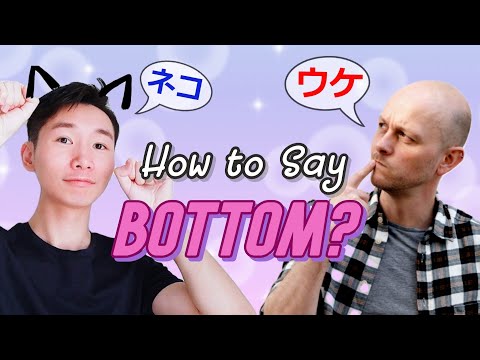
  • ·Two terms exist for bottom: 'neko' and 'uke'. The hosts debate which is more dominant on apps, with Andrew observing 'uke' is now more prevalent and Meng feeling 'neko' is still common.
  • ·'Neko' is also the Japanese word for cat; the hosts note the term has a cutesy connotation, and one host speculates it may be associated with younger gay men.
  • ·The term 'seme' (attacker) is paired with 'uke' (receiver) in yaoi/boys' love manga, but the hosts say 'seme' is rarely if ever used by the real-life gay community in Japan.
  • ·'Seme' and 'uke' carry an S&M-adjacent connotation of attacking versus receiving, whereas 'tachi' and 'neko' are the more culturally grounded community terms.
  • ·The kanji for bottom uses the 'concave' character ('boko'), which the hosts describe as visually representing a key entering a lock.
  • ·'Riba' means versatile/vers; it is a loanword derived from the English word 'reversible', written in katakana.
  • ·The kanji used for 'riba' (vers) is the character for 'mawaru' (to turn/rotate); the hosts suggest it was chosen because visually overlapping the convex and concave kanji creates a middle-ground shape.
  • ·'Uke-yori' means vers-bottom (leaning toward bottom); 'tachi-yori' means vers-top; 'yori' comes from a verb meaning 'to lean toward' or 'to approach'.
  • ·The hosts say they have never heard 'neko-yori' used on apps — only 'uke-yori' — despite 'neko' being used on its own; they invite viewers to correct them if they are wrong.
  • ·'Bari-tachi' means an exclusive or pure top; 'bari-uke' (and possibly 'bari-neko') means an exclusive or pure bottom — someone who only takes one role.
  • ·The hosts clarify 'bari' does not specifically imply 'power top/bottom' in terms of intensity, but rather means exclusive or pure in terms of role preference.
  • ·They note all of these position terms are commonly listed on dating and hookup apps in Japan, and encourage viewers to copy the terms from the video description.
  • ·The hosts frame the video as an introduction and indicate they plan to cover more Japanese gay lingo in future videos.
Views
23k
23,489 total
Likes
797
3.39% like rate
Comments
77
0.33% comment rate
Gay Japanese Slang Lesson: Top, Bottom, Vers
Comment deep diveExplore all 77 comments →filter by sentiment · theme · superfans · questions · what to fix
§01

Summary

Andrew and Meng, two English-speaking expats with 8 and 5 years in Japan respectively, walk through the gay community's position vocabulary: tachi (top), uke and neko (bottom), riba (vers), and the yori and bari modifiers that let men shade within those categories. The conversation turns on a genuine disagreement — whether neko or uke is the dominant term for bottom — with neither host winning, and both inviting the comment section to adjudicate. Kanji etymology and visual logic (deko/boko as convex/concave characters) give the lesson an unexpected layer of linguistic texture.

Content pillars
Japanese gay cultureslang and vocabularyexpat life JapanLGBTQ+ identity
§02

Engagement vs the rest of the channel

How this video's like-and-comment rate compares to this channel's running average.

Engagement vs channel avg 3.72pp
3.72% this video
0.00% avg
Like rate
3.39%
of viewers tap like
Comment rate
0.33%
of viewers leave a comment
§03

The hook

medium

Opening 15 seconds — the bit that decides whether a viewer keeps watching.

[0:00] everyone should mark their positions on their apps if you don't leave any information on it, I will get very confused [0:09] I would always say I am 'Ukeyori', which is vers bottom. [0:15] which part is standing?

Assessment

The in media res cold open creates mild curiosity and signals personality, but 'positions on apps' is too vague for cold viewers to immediately understand the topic — only 'Ukeyori' and 'vers bottom' at 0:09 anchor the subject. The video then spends nearly two minutes on background before the actual lesson begins, burning retention before the payoff arrives.

Hook quality
medium
Call-to-action
present
Archetype
scene
Composite score
4.7/10
Hook score · 6 dimensions
character presence
6/10
clarity
4/10
curiosity
6/10
specificity
5/10
stakes
3/10
time to payoff
4/10
Anti-patterns detected
vague teaseslow context
§03b

Hook rewrites

Three alternative openings, each in a different archetype. Each is under 40 words — completable in 15 seconds.

Rewrite №1 · investigatortechnique: lead_with_outcome

I've spent 8 years in Japan and the one thing no textbook teaches you: gay men here call themselves cats — and the word for bottom literally comes from a verb meaning 'to stand.'

WhyLeads with credibility (8 years), delivers a specific surprising fact (cats = bottom), and teases the etymology contradiction — two hooks in one sentence matching what drives 45% of comment engagement.

Rewrite №2 · experimentertechnique: flip_declarative_to_stake

I opened a Japanese gay dating app with zero vocab and embarrassed myself. After five years here, I finally know what tachi, neko, and riba actually mean — and the etymology is genuinely weird.

WhyRelatable confusion-to-resolution arc; names the actual terms cold so search-intent viewers immediately know this is their video; 'genuinely weird' primes the curiosity that drives most of the substantive comment discussion.

Rewrite №3 · stakeholdertechnique: identity_callout

If you're gay in Japan or pursuing Japanese guys on apps, there are four words you need before you post a profile — and 'seme' isn't one of them.

WhyDirectly targets the likely viewer, raises stakes (profile-level embarrassment), and subverts the yaoi-educated viewer's assumed vocabulary — mirroring the seme-is-wrong correction that generates visible debate in the comments.

§03c

Title gap & rewrites

Gap 22 · undersell

The title accurately signals the content but strips out all the personality and surprise — comments show viewers loved the unexpected etymology (kanji shapes that look like anatomy, a cat metaphor for bottom), the candid personal disclosures, and the banter. A dry 'Lesson' framing undersells a video that is genuinely entertaining and dense with counterintuitive facts.

What commenters actually quoted
  • · neko (7+ mentions)
  • · uke / uke-yori (5 mentions)
  • · sandoichi (top-liked suggestion comment)
  • · bari-tachi / bari-neko (2 mentions)
Anti-patterns in current title
generic emotion
Thumbnail recommendation

Show the kanji 凸 (top) and 凹 (bottom) side by side with a cat icon between them — the character shapes are the most surprising visual moment in the video and would make the thumbnail distinctive and searchable in a niche with few visually interesting competitors.

3 title rewrites
  1. 01 · Why Japanese Gay Men Call Themselves Cats: Slang Explained
    curiosity gap
    The neko = cat revelation is the single most-commented fact (7+ references) and is genuinely surprising to non-Japanese viewers — leading with the question monetises the curiosity that already drives the comment section.
  2. 02 · Japanese Gay Dating App Vocabulary: Tachi, Neko, Uke & Riba
    specificity
    Names all four actual terms up front, driving search traffic from viewers who already know one word and want the full picture — the strategy @kisunamayan's top-liked comment validates by immediately extending the list.
  3. 03 · Gay Japan: The Slang Your Anime Lied to You About
    contrarian
    Directly addresses the seme/uke yaoi misconception surfaced in multiple comments, positioning the video as corrective authority for the large anime-adjacent audience who arrived with wrong assumptions.
§04

What viewers said

Explore all →

77 comments analysed and clustered into themes.

Sentiment breakdown

Mostly positive

positive 50%neutral 40%negative 10%
Real breakdown over 42 of 42 root comments — every comment analysed, not sampled.

Viewers repeatedly called the video 'so informative' and praised the kanji visual breakdown — 'the graphics are so funny' appeared alongside genuine learning. The neko term sparked the most delight: 'sounds like someone who just shows up from time to time, gets food and attention then leaves; like a stray cat' became a meme in the thread. Andrew's reluctance to reveal his position before finally admitting 'ukeyori' was widely enjoyed as a running gag.

Top comment themes

10 clusters surfaced

  1. 01
    Video is informative and appreciated (~12 mentions) — 'very informative', 'learned a lot', 'clarified everything'
  2. 02
    Neko etymology and connotations (~8 mentions) — cat/pussy connection, cuteness, regional usage debated
  3. 03
    Personal position disclosures and humor (~6 mentions) — viewers outing themselves, jokes about 'getting behind' the content
  4. 04
    Requests for more slang beyond positions (~5 mentions) — sandoichi, sanpi, chambara, dom top, power bottom
  5. 05
    Seme vs uke vs neko terminology debate (~4 mentions) — yaoi origins vs real-world usage, 'seke' query
§04a

Audience pulse

How the audience feels — a Net Sentiment mood score, how split the room is, and an early churn signal. All from the comments, not YouTube analytics.

+48Positivemood · −100 to +100
Mood (raw)
+40
before channel-norm adjust
Polarization
0.85
0 = uniform, 1 = spread
Divisiveness
0.19
is the room split?
Warmth
24%
warm / emotional tone
Analysed
42
comments (confidence)
Churn signalelevated3 comments flagged dissatisfaction (7.1% — channel norm 2.8%)
Emotional tone breakdown
  1. Curious
    31%
  2. Warm
    24%
  3. Funny
    19%
  4. Neutral
    10%
  5. Excited
    7%
  6. Concerned
    5%
  7. Angry
    2%
  8. Sarcastic
    2%

Net Sentiment Score over 42 analysed comments; headline adjusted toward the channel norm (Bayesian, C=20). Polarization = normalised entropy. Comment-derived — not YouTube analytics.

§04a

Audience composition

★ algo-friendly · +40

Who actually showed up in the comments — psychographic, topical and language mix. Computed deterministically from 42 labeled root comments.

Identity signals

Who they are

  1. Debating
    7%
  2. Devoted fan
    7%
  3. Sharing a story
    7%
  4. Found inspiring
    2%
Topic mix

What they talked about

  1. Other
    100%
Language mix

In which languages

  1. English
    100%
Algorithm signal · proxy

How YouTube’s satisfaction model likely reads this

★ algo-friendly · +40

YouTube’s 2025 discovery shift now weights satisfaction signals — comment sentiment, tone, and depth. We can’t see the model, but we can estimate its inputs. Directional only.

Positive ratio
50%
share of comments labelled positive
Curiosity share
55%
curious / nostalgic / warm tones
Critical share
2%
critical / sarcastic tones
Net satisfaction
+40
pos% − crit%, −100..+100
§04b

Moments that landed

Key transcript moments — tap a timestamp to jump to that point in the video.

0:00Opening 'mark your positions on your apps' line sets a playful, self-aware tone before the hosts even introduce themselves.0:09Andrew self-identifies as 'ukeyori' before the lesson starts — personal disclosure that reframes the whole video as participant observation, not textbook.1:31'The kanji itself looks like this shape, looks like a dick' — the visual gag lands as the video's most shareable moment and anchors the deko/boko etymology.1:39The neko vs. uke debate opens here and runs for nearly two minutes — the unresolved disagreement is what drove 45% of comments to weigh in with personal experience.3:17Andrew admits he read the neko Wikipedia article but doesn't remember it — a candid credibility moment that either endears or alienates depending on the viewer.5:44Meng turns the camera on Andrew and asks him to declare his position — the pivot from lesson to personal reveal that the audience had been waiting for.5:53'I am a uke-yori' — Andrew's answer, delivered after a comedic pause, is the emotional payoff of the whole video and the moment the chat becomes biographical.7:45'Copy and paste into your apps' closes the loop on utility — a practical CTA that validates the video's niche and likely drove shares within the community.
§04c

What viewers reacted to

Each comment theme mapped to the transcript moment that sparked it.

Appreciation and humorous feedback (54.5%)

Andrew's upfront 'ukeyori' confession at the top (0:09), the kanji visual that 'looks like a dick' (1:31), and the drawn-out reluctance before finally disclosing his position (5:49) were the moments that generated the warmest and funniest comment responses.

0:091:315:49
Slang terms and cultural observations (45.5%)

The neko vs uke debate (1:39–3:17) sparked the most comment discussion; the 'riba from reversible' etymology (4:18) drew cross-cultural comparisons to Chinese 1/0/0.5 coding; the bari-tachi/bari-uke introduction (7:13) prompted viewers to name additional group-sex terms the hosts hadn't covered.

1:392:083:174:187:13
§05

Friction points

All criticism →

Severity × frequency — ranked. Each point has an evidence quote and a concrete before/after suggestion.

Audio quality — mic distance / levels too low for a vocabulary-teaching videosev 3/5 · 2 mentions
sound is real bad. sad for a video with such an important word↗ view
FixUse lavs on both hosts; do a 10-sec level check before each take. For a slang lesson, viewers need crisp consonants — re-shoot any take where 'uke' and 'neko' aren't cleanly audible.
Wrong claim that 'neko-yori' isn't used — viewers in Japan say it issev 3/5 · 2 mentions
And the compound ネコより (mostly bottom) is also commonly used.↗ view
FixPin a correction comment + add a card at 6:54 saying 'Viewers tell us ネコより IS used regionally — see Fukuoka note below.' Saves the credibility hit.
No coverage of 'sides' (non-penetrative) — two separate viewers askedsev 3/5 · 2 mentions
What? No "sides"? No word for people who only are oral?↗ view
FixEither define the Japanese equivalent on-screen ('side' / オーラル専門) or end the video with a card listing what part 2 will cover (sides, dom-top, power-bottom, seke).
Hosts repeatedly hedge ('I think', 'I guess', 'maybe', 'I could be wrong') instead of researching the etymologysev 4/5 · 1 mentions
Two non-Japanese guys talking about Japanese gay slang and basically admitting they don't know what they are talking about... "I read about it on wiki years ago but I don't remember." I'll pass thx.↗ view
FixBefore recording, lock the etymology of tachi/neko/uke/riba with one authoritative source (cite it on-screen). Replace 'I think' with 'According to X' or cut the speculation.
Two unanswered viewer questions about seme prevalence and 絡みタチ/バックタチsev 2/5 · 2 mentions
Do you know what difference between 絡みタチ & バックタチ ?↗ view
FixPin a comment listing the 5 most-asked follow-ups + promise a part 2. Even a one-line reply per question lifts the parasocial signal.
Missed regional variation — Kansai/Kyushu defaults to ネコ, hosts only know Tokyo usagesev 3/5 · 1 mentions
When I stayed in Fukuoka last year, people would usually use ネコ I don't remember ever hearing ウケ down there. So I think there is a regional difference as well.↗ view
FixAdd a 30-sec regional-variation block: Tokyo (uke-dominant) vs Kansai/Kyushu (neko-dominant). One on-screen map beats a paragraph.
Etymology of 'tachi' presented as guess ('to stand') — viewer offers the actual kanji source 太刀 (sword)sev 3/5 · 1 mentions
I had always thought "tachi" was from 太刀.↗ view
FixOpen the next video with a 'we got tachi wrong — here's the 太刀 (sword) reading' callback. Owning corrections builds credibility.
Power-top / dom-top / power-bottom terms never addressed even though hosts touch 'bari-tachi'sev 2/5 · 1 mentions
opens vocabulary book Right, so what about "dom top"? And "power bottom"? (Asking for a friend)↗ view
FixCover bari-tachi/bari-uke/bari-neko as 'power' equivalents in a follow-up — clarify whether 'pure' or 'power' is the right English gloss (hosts contradict each other at 7:27–7:33).
Yaoi term 'seke' (seme+uke vers) raised by viewer, hosts didn't mention itsev 2/5 · 1 mentions
In yaoi, I'll sometimes come across the word "seke" (combination of seme and uke) to describe a versatile character. Is this an actual term the gay community uses, or is like seme and used exclusively in yaoi?↗ view
FixReply in-comments now + add 'seke' to the yaoi-vs-IRL terminology segment of part 2.
Hosts visibly contradict each other on whether 'bari-' means 'power' or 'pure', leaving viewers unsuresev 2/5 · 0 mentions
so that means you are a pure top ( Power top, power bottom) — Nah, it doesnt have to be power. Pure top!
FixResolve disagreements in pre-production; if you keep the disagreement on-camera, end the segment with a definitive on-screen text card ('Consensus: バリ = exclusively top/bottom, not necessarily dominant').
Kanji-shape explanation for 凸/凹/turn is rambling and unclear — viewer paraphrases it more cleanly than hostssev 2/5 · 0 mentions
The talk about 凸 and 凹 and then the middle one not really represented visually through the character shape, its sorta similar to Chinese with 1 for top and 0 for bottom, but 0.5 for versa... :')↗ view
FixReplace the 4:30–5:30 monologue with a 10-sec animated graphic: 凸 stacks onto 凹 → turn kanji. One visual beats a minute of 'and then I think…'
Lesbian/queer-community terms entirely uncoveredsev 2/5 · 1 mentions
Are there any differences in terms used for top/bottom/vers in Japan's lesbian/queer community?↗ view
FixBring on a lesbian/bi Japanese guest for a companion video — title 'Japanese lesbian slang' would unlock a fresh audience without diluting this channel.
One overtly racist/homophobic drive-by ('Another white obsessed asian')sev 2/5 · 1 mentions
Another white obsessed asian I'll pass↗ view
FixAdd the phrase to YouTube's blocked-words list so it's filtered next time; not a content fix, a moderation fix.
Hosts admit weak research ('huge Wikipedia article about it … I haven't read it in a long time')sev 2/5 · 0 mentions
neko has a really interesting background it's a huge Wikipedia article about it … yeah I haven't read it in a long time so I don't really remember
FixEither read it before the shoot and deliver the highlight in 20 seconds, or cut the reference — flagging your own homework gap to camera is the worst option.
Background tangent on 'yaoi music from Rick and Morty' delights one viewer but isn't explained — niche signal lostsev 1/5 · 1 mentions
btw loved the inclusion of the music from a rick and morty episode!↗ view
FixLean into it — short on-screen credit ('Music: Rick & Morty S2 cue') costs nothing and rewards the people who caught it.
§Sp

Sponsor fit

Build first · 58/100

What a brand or agency would see evaluating this video — which sponsors to pitch, why, what to charge, and what's safe.

Audience shows strong learning-utility intent — multiple commenters explicitly say they'll 'copy and paste into apps' and one (@wanton0425) says he'll change his app username based on a term learned, which is direct purchase-adjacent behavior. ~14% of comments (6/42 surfaced) ask follow-up vocabulary questions ('sides?', 'oral?', 'dom top?', 'seke?', 'hai joō?'), signaling the audience treats this channel as a reference resource — high trust, mid-spend power. Ad tolerance reads neutral-positive; no anti-sponsor sentiment in the thread.

Integration rate
$470–$700
60-90s mid-roll
Dedicated video
$750–$1,120
full sponsored video
Basis: About 23,500 people have watched this video, which is the baseline a brand pays for. The audience is unusually valuable per-view because it's a hard-to-reach niche — LGBTQ Japan-curious viewers, many already on dating apps and language-learning — which lets us push the rate above raw ad-CPM math (CPM = what advertisers pay per 1,000 views). A 60-second sponsor mention inside the video is worth roughly $470–700; a full standalone sponsored video is worth $750–1,120. The number is higher than 'normal' YouTube ad revenue because brands pay for trust and audience scarcity, not just views.
Brands to pitch
GrindrDating appLiterally the platform commenters reference ('mark your positions on their apps', @wanton0425's username change) — the video's premise IS app-profile vocabulary, making integration native rather than interruptive
BluedDating app (Asia-focused)@marcuseldridge8675 names Blued unprompted in comments — confirmed organic mention with an audience already on the platform discussing Japan/Asia gay dating
PimsleurLanguage learningEntire video is Japanese vocabulary instruction; @thecatpresentsfromjapan7851 (15-year Japan resident) and multiple commenters engage with kanji/etymology — learner-density is high in this audience
italkiLanguage tutoringComments debating actual term origins (@persik_cereza explains Neko=cat=on-all-fours; @ryuuakiyama3958 raises 太刀 etymology) show an audience that wants depth beyond app-vocab — fits 1:1 tutor pitch
AiraloTravel eSIM@sxmenchia9483 'ready to go to Tokyo'; @im.ralphn8 writes from Saigon; @Kostus77 reports Fukuoka regional usage — international LGBTQ travel-to-Japan audience signal, exactly Airalo's wedge
SurfsharkVPNVPN brands actively court LGBTQ creators (privacy-positioned messaging); Surfshark has run explicit Pride campaigns and fits an audience using dating apps in a country (Japan) where privacy still matters
MyGayTrip / misterb&bLGBTQ travel bookingTokyo-curious commenters + the channel's whole premise is gay life in Japan; misterb&b is the dominant LGBTQ-niche travel sponsor on YouTube
Tinder Plus / HornetDating app altHornet is one of the few global gay dating apps that actively sponsors LGBTQ YouTubers; positioning is direct fit with the 'positions on apps' premise
Avoid
  • Family / kids brandsExplicit sexual-vocabulary content (top/bottom/vers) makes the video unsuitable for family-positioned advertisers regardless of audience demo
  • Conservative-coded financial brands (e.g. traditional banks)Brand-safety teams routinely flag LGBTQ sexual-content channels — pitch LGBTQ-explicit allies (Wise, Revolut Pride) instead
  • Alcohol / gamblingRegional ad-law risk in Japan/SE Asia where significant audience lives (@im.ralphn8 Vietnam, @Kostus77 Fukuoka)
How to integrate

Pre-roll dedicated mention (15–30s) before the lesson begins — the audience is here for the vocabulary payoff and would tolerate an upfront 'today's video is brought to you by [app/learning brand]' better than a mid-roll that interrupts the term-by-term teaching

Brand safety
Toxicity
clean — one mildly negative comment (@lubetubeshinoda2535 'another white obsessed asian'), one substantive critique (@markh8564 'don't know what they're talking about'); no slurs, no harassment threads
Controversy
none detected — no FTC/disclosure flags, no strike risk; content is educational about Japanese language even if subject is adult
Audience conduct
~95% on-topic, near-zero spam; 1 self-promo comment (@marcuseldridge8675) is the only noise
Sponsor evidence quotes
Thinking of changing my app username to Bari Tachi. Hehehe..
Direct intent to act on video learnings inside a dating app — exact behavior a dating-app sponsor pays for↗ view
Yay so informative. I'm ready to go to Tokyo 💚
Travel-trigger comment — eSIM/VPN/booking sponsors pay for this exact transition moment↗ view
you can copy and paste into your apps.
Creators themselves frame the video as utility for app use — sponsor read fits the same framing
I have been in Japan for 15 years and in a relationship with same guy for 10... refreshing to see a channel that can speak about these issues openly
Deep-trust loyalty signal — long-resident expat treating channel as authority validates premium niche-scarcity multiplier↗ view
Algorithm read · what to do next 14 days

Strong Performer · score 72/100

high
The next 14 days
  1. Day 1 (0-24h)
    Add timestamped chapters (Tachi / Uke vs Neko / Riba / yori suffix / bari- intensifier / closing) directly on the existing video
    Comments treat the video as a reference glossary (@mixboymakub 'know how to introduce myself now', @wanton0425 changing username) — chapters convert that into algorithmic scrub-rewatch signal
    WatchAverage view duration delta in YouTube Studio over 7 days; chapters typically lift it 10–20% on reference-format videos
  2. Day 2-3
    Pin a comment listing the terms (Tachi / Uke / Neko / Riba / Uke-yori / Tachi-yori / Bari-tachi) and explicitly invite the 'seke', 'sides', 'dom top', 'hai joō', 'neko-yori' follow-up questions raised in existing comments
    5+ comments raised exact follow-up terms (@jamey_a seke, @rianmilit sides, @kieranandrew2297 dom top, @okmega22 hai joō, @MP-lv5vk seme) — surfacing these multiplies the comment count, which is the strongest re-promotion signal
    WatchNew comment rate over 72h; goal: 10+ new comments restarts the recommendation engine
  3. Day 4-7
    Cut a 45–60 second Short titled 'Are you Tachi, Uke, or Neko?' from 5:44–6:30 (the personal-position reveal — strongest hook in the video)
    Personal-reveal moment got the largest comment cluster (positions, @im.ralphn8 falling in love, multiple 'I am' comments) — proves it's the spike point for engagement
    WatchShort's 30-day view count and the click-through it sends to the long-form (YouTube Studio → Reach → External / Suggested videos)
  4. Day 7-14
    Publish a follow-up video answering the specific open questions from comments — sandoichi/sanpi/chanbara (@kisunamayan), seke (@jamey_a), regional differences (@Kostus77 Fukuoka uses neko), and 絡みタチ vs バックタチ (@CHCLE)
    These are evidence-grounded video requests sitting in the comments — the audience has pre-validated demand, and the new video links back to this one as Part 1, re-promoting both
    WatchFirst-24h views on the new video AND lift on this video's daily view count from the end-screen/cards link
Why it could lift
  • +3.7% engagement rate (797 likes + 77 comments on 23.5k views) is well above the YouTube median (~2%)
  • +Vocabulary-list format drives high session re-watch (@mixboymakub: 'I know how to introduce myself now') — the video is a saved reference, lifting average view duration
  • +Comments contain dense follow-up questions ('sides?', 'dom top?', 'seke?', 'oral-only?') — algorithm reads this as topic depth and surfaces related-creator queries
  • +Strong evergreen pull: at 6 years old comments are still arriving ('apologies for necroposting' — @caley2000), meaning YouTube continues to find new niche searchers
  • +Audience-topic clusters show 54.5% appreciation + 45.5% deep cultural engagement (slang etymology) — a near-perfect satisfaction split with no critic cluster
Why it might stall
  • Niche subject (gay Japanese slang) caps the addressable audience — algorithm has limited 'similar viewer' pool to surface to
  • Two flagged technical complaints (@CoreyChambersLA 'put your mic closer'; @amesavis 'sound is real bad') correlate with early-dropoff risk on the first 30 seconds
  • Hosts admit on-camera uncertainty ('I think… I could be wrong') — @markh8564 explicitly says he'll pass over this; lowers retention on knowledge-seeking viewers
  • No chapters set — hurts re-watch / scrub behavior on a list-format video that would benefit massively from them
  • 23.5k views in ~6 years signals the algorithm's already chosen its lane for this video; large new lift is unlikely without a re-pump trigger

Algorithm Signal is a proxy. YouTube’s satisfaction scores aren’t public. Directional, not predictive.

§05

The audience asked & asked for

All questions →

Unanswered questions and explicit requests from the comment thread — fuel for the next upload.

Questions

13 unanswered

  • ?Is 'seke' (seme+uke hybrid) used in the real gay community or only in yaoi? (~3 mentions)
  • ?Is there a Japanese term for 'sides' (oral-only, no penetration)?
  • ?What is the actual etymology of 'neko' — is it really related to 'pussy' or 'cat position on all fours'?
  • ?Does 'Hai joō' mean 'Yes queen' in Japanese gay culture?
  • ?What is the difference between 絡みタチ and バックタチ?
  • ?Are different terms used in Japan's lesbian and queer women's community?
  • ?Does anyone actually use 'seme' in real-life gay contexts, or is it exclusively yaoi?
  • ?Is 'neko-yori' actually used anywhere (Meng says yes, Andrew says no — who is right)?
  • ?Is 'neko' generationally coded — do younger gay men use it more?
  • ?What is 'dom top' or 'power top' in Japanese — is 'bari-tachi' the exact equivalent?
  • ?If 'uke' dominates apps now, do people still use 'seme' as the pairing?
  • ?What are terms for male sex workers in Japanese gay culture?
  • ?Is 'tachi' really from 太刀 (katana) rather than the verb 立つ (to stand)?
Requests

8 explicit asks

  • askMore Japanese gay slang videos covering terms beyond positions — sandoichi (3P), sanpi, chambara (~4 mentions)
  • askA follow-up on dom top, power bottom, and kink-role equivalents in Japanese
  • askMeng to reveal his own position (running joke, ~3 comments)
  • askBetter microphone / audio quality in future videos (~2 mentions)
  • askVideo on lesbian and queer Japanese terminology
  • askDeep dive on neko etymology with sources
  • askJapanese gay dating app culture and etiquette video
  • askComparison of gay slang across Japan, China, and English-speaking countries
§06

What to make next

Three video ideas pulled directly from what the comments asked for.

01

Japanese gay slang part 2: group sex, kink roles, and dating app culture terms (sandoichi, sanpi, chambara, dom top equivalents)

TitleJapanese Gay Slang Part 2: Beyond Top & Bottom
HookThe Japanese gay vocabulary doesn't stop at top and bottom — here's everything else your app profile actually needs
Why nowMultiple top comments already named the exact terms they want covered, and the creators explicitly invited follow-up requests at the end of this video.
02

Why does 'neko' mean bottom? — deep dive into the etymology, cat imagery, and generational shift from neko to uke

TitleThe Strange History of 'Neko' in Japanese Gay Culture
HookOne word split the comment section: is neko a slur, a cute nickname, or just old-fashioned?
Why nowThe neko debate was the single most-liked comment thread and multiple viewers independently questioned the cat/pussy etymology — clear unresolved curiosity.
03

Japanese queer women's vocabulary — terms used in lesbian and bi women's communities in Japan

TitleJapanese Lesbian & Queer Women's Slang Explained
HookEverything we just covered was for gay men — so what words do queer women in Japan actually use?
Why nowDirect request in comments with zero existing coverage in this series — low competition, clear audience demand.
04

Gay slang comparison: Japan vs China vs English — how the same concepts get coded differently across cultures

TitleGay Slang in Japan vs China vs the West: Same Thing, Different Words
HookIn China it's seme and uke from anime. In Japan it's tachi and uke from linguistics. In English it's top and bottom from... nobody knows.
Why nowMeng's China background and Andrew's Western perspective already surfaced this comparison organically in the video; the audience noticed and engaged with it.
05

Gay dating apps in Japan — how to actually write your profile, what the fields mean, and what signals are read positively or as red flags

TitleNavigating Gay Dating Apps in Japan: A Foreigner's Guide
HookKnowing tachi and uke is step one. Here's everything else Japanese gay apps expect you to already understand.
Why nowSeveral comments came directly from people preparing to visit or move to Japan and framing this vocabulary as practical app prep — 'I'm ready to go to Tokyo'.
§07

Creator action items

Concrete, testable changes for the next upload. Each cites a timestamp, a comment quote, or a metric — and names what to watch.

Do 01

Fix audio on next upload — invest in a lavalier mic and record both hosts on separate channels

Evidence@CoreyChambersLA 'put your mic closer'; @amesavis 'sound is real bad. sad for a video with such an important word'
Watch forFirst-30s retention on next video should rise above this video's baseline; track in Studio → Audience retention
Do 02

Pre-research etymology before recording instead of speculating on camera

Evidence@markh8564: 'two non-Japanese guys talking about Japanese gay slang and basically admitting they don't know what they are talking about... I think... maybe... I read it on wiki years ago'
Watch forReduce 'I think / I'm pretty sure / maybe' count to under 5 per 8-min video; expect higher like-ratio and fewer dismissive comments
Do 03

Add chapters retroactively to this video

EvidenceList-format video covering 7+ distinct terms with no chapter markers
Watch forAvg view duration +10–20% in 14 days
Do 04

Publish Part 2 covering sandoichi (3-way), sanpi (3P), chanbara, seke, sides, dom top, hai joō, neko-yori, 絡みタチ vs バックタチ

Evidence9 distinct unanswered term-requests in the comments (@kisunamayan, @jamey_a, @rianmilit, @kieranandrew2297, @okmega22, @MP-lv5vk, @CHCLE, @tarotgatesoflight)
Watch forPart 2 should exceed 23k views within 90 days given the pre-validated demand
Do 05

Cut a Short from the 5:44–6:30 personal-position reveal

EvidenceHighest comment density around 'Andrew, what's your position?' and audience reciprocating (@The-GCN 'タチ寄りです', @stretchy1260 'Versatile here', @marcojacinto824 'Neko is kinda cute')
Watch forShort hitting 50k+ views; track funnel-through to this long-form
Do 06

Pin a comment glossary with the 7 terms + explicitly ask for regional variations

Evidence@Kostus77's Fukuoka-uses-neko observation is exactly the kind of crowdsourced data that lifts comment threads
Watch forComment count rises from 77 to 100+ within 30 days
Do 07

Make a dedicated 'Regional Japanese gay slang' video — Tokyo vs Osaka vs Fukuoka

Evidence@Kostus77: 'When I stayed in Fukuoka last year, people would usually use ネコ... I think there is a regional difference as well'
Watch forValidate by including 1-2 native Japanese speakers from different regions; comments asking for native speaker input
Do 08

Address the 'native speaker' credibility gap by co-hosting future videos with Japanese gay creators

Evidence@markh8564 pass-comment + the hosts' own 'we could be wrong, correct us in the comments'; @persik_cereza and @ryuuakiyama3958 contributed correct etymology in comments that the hosts missed
Watch forLike-ratio on co-hosted vocab videos vs this one
Do 09

Build a downloadable / pinned PDF glossary the audience can paste into apps

EvidenceCreators literally tell viewers 'copy and paste into your apps' at 7:48; @wanton0425 already acting on it
Watch forClick-through rate on a description-linked Google Doc / Notion page
Do 10

Add a 'sides' / oral-only / non-position-based identity video

Evidence@rianmilit 'Is there a word for sides?'; @tarotgatesoflight 'No sides? No word for people who only are oral?'
Watch forCover a category the channel hasn't yet; new commenter acquisition
Do 11

Cover yaoi-vs-real-life vocabulary in a follow-up (seme/uke origin, why gay community doesn't use seme)

Evidence@jamey_a: 'In yaoi, I'll sometimes come across the word 'seke'... is this an actual term the gay community uses?'; hosts themselves flag the yaoi-vs-reality split at 2:32
Watch forCross-promote into anime/yaoi audience — broader addressable market
Do 12

Title future vocab videos with an explicit position-format question hook (e.g. 'Are you Tachi, Uke, or Riba?')

EvidencePersonal-position framing at 5:44 generated the highest comment density and self-identification (@The-GCN, @stretchy1260, @wanton0425)
Watch forCTR on next vocab title vs this video's CTR
Do 13

Show kanji on-screen as text overlays when discussed (凸 凹 太刀)

Evidence@mnrbrt engages deeply with 凸 凹 shape symbolism; @ryuuakiyama3958 raises 太刀 etymology — visual reinforcement deepens this
Watch forComments engaging with kanji/etymology in next video
Do 14

Translate / subtitle into Traditional Chinese and Vietnamese

Evidence@im.ralphn8 from Saigon Vietnam, @mnrbrt comparing to Chinese 1/0/0.5 system — clear non-English-speaking audience interest
Watch forWatch-time share from VN/TW/HK in YouTube Studio
Do 15

Build an 'app profile vocabulary' series across languages (Japanese done — Korean, Thai, Mandarin next)

EvidenceDirect copy-paste utility framing of the video + global audience signal across comments
Watch forSeries-level subscriber conversion rate
Do 16

Pitch Grindr/Blued/Hornet for sponsorship using this video as a deck — exact use-case for their product

EvidenceVideo literally opens with 'mark your positions on their apps'
Watch for1+ qualified sponsor conversation within 30 days
Do 17

Add an end-screen card to a 'Tokyo gay scene' or travel-themed video for the travel-curious audience

Evidence@sxmenchia9483 'ready to go to Tokyo'; @im.ralphn8 international viewer
Watch forEnd-screen click-through rate
Do 18

Reply in-thread to the etymology contributors (@persik_cereza, @ryuuakiyama3958, @mcuggetmeal) acknowledging their corrections

EvidenceThree commenters offered substantive etymology (Neko=on all fours, 太刀, pussy/boy-pussy parallel) that the hosts missed
Watch forStrengthens superfan loyalty; track repeat-commenter rate
Do 19

Address the 'cuteness' angle of Neko in a Short — it's the term commenters latched onto emotionally

Evidence@beatrix1120 'stray cat'; @marcojacinto824 'kinda cute'; @mcuggetmeal pussy/bussy parallel — Neko has memetic potential the other terms lack
Watch forShort virality vs other category Shorts
Do 20

Tighten the conversational format — hosts repeat each other and self-correct mid-stream (5:33 'that's why I got confused')

EvidenceTotal video runtime 8:10 for what is fundamentally a 6-term glossary; @mixboymakub notes production has improved since — keep tightening
Watch forAvg view duration on next vocab video
Do 21

Capture a 'we were wrong / corrections' follow-up acknowledging @persik_cereza's Neko etymology + @ryuuakiyama3958's 太刀 theory

EvidenceComments with correct etymology have higher like counts than the video's own host-speculation in places
Watch forEngagement on corrections video; trust-rebuild signal in comments
Do 22

Use the description glossary the creators promised but apparently underdelivered on (described at 7:45)

EvidenceHosts promise 'we gonna put everything into the description' but commenters still ask basic spelling/usage questions
Watch forReduction in 'how do you spell X' comments on next vocab video
§R1

Reply queue

Who to reply to first — ranked by impact, with a ready-to-send draft in your voice.

@kisunamayan · high↗ view

hello meng...you should also add to the list 1.)sandoichi....... サンドイッチ sandwich (bread)..... repairing to 3 person (orgy) one guy between of 2 guys 2.)or sanpi ..........3P (3 person) 3.)chambara ........チャンバラ repairing 2 person playing your banana's to chanbara (samurai/sword) and looks like luke vs vader in the movie return of the jedi no.1 & 2 words are very usefull not even to gay people but also in straight person too

Why: 12 likes, substantive additions to the lesson with new vocabulary — sandoichi, sanpi, chambara — that could seed a whole follow-up video. High engagement potential.
Draft reply

Sandoichi is genuinely brilliant — a sandwich reference, I love it. We'll definitely cover these in a part 2, thank you for adding them!

@beatrix1120 · high↗ view

I like the term Neko. Sounds like someone who just shows up from time to time, gets food and attention then leaves; like a stray cat XD

Why: Highest-liked comment at 26 likes, genuinely funny and shareable — replying boosts the thread and keeps the joke alive.
Draft reply

Honestly this is the most accurate description of neko I've ever heard and I wish we'd thought of it for the video 😂

@thecatpresentsfromjapan7851 · high↗ view

this is an interesting video. I had never heard うけよりとかたちより。I have been in Japan for 15 years and in a relationship with same guy for 10. but not really open so it is refreshing to see a channel that can speak about these issues openly. thats for the info. and if I had to label myself it would be たち。でもたまに受けもできる。btw loved the inclusion of the music from a rick and morty episode!

Why: 15-year Japan resident in a same-sex relationship adding real on-the-ground context — a reply validates their experience and anchors the channel as a genuine community space.
Draft reply

15 years and still learning new vocabulary — that actually makes us feel so much better! Glad this felt like a safe space to talk about it, and yes that Rick and Morty track was perfect for the vibe 😄

@jamey_a · high↗ view

In yaoi, I'll sometimes come across the word "seke" (combination of seme and uke) to describe a versatile character. Is this an actual term the gay community uses, or is like seme and used exclusively in yaoi?

Why: Unanswered specific vocabulary question that fits exactly what this channel is about — easy win to answer and shows responsiveness.
Draft reply

Great question — from what we know, 'seke' stays firmly in yaoi/fanfic territory, kind of like seme. In real-life apps and conversation you'd just say riba or uke-yori. But we'd love to hear from anyone who's actually seen it used IRL!

@Kostus77 · high↗ view

One bit of info I can contribute: When I stayed in Fukuoka last year, people would usually use ネコ I don't remember ever hearing ウケ down there. So I think there is a regional difference as well.

Why: 8 likes, adds genuine new information (regional variation) that enriches the topic — acknowledging it publicly rewards good-faith contributions.
Draft reply

This is so interesting — regional variation was something we wondered about and didn't have data on. Did neko feel completely equivalent to uke down there, or was there a slightly different nuance to it?

@persik_cereza · medium↗ view

The word Neko (cat) is opposed to Tachi (standing). Neko refers to stay in the position on all fours, like a cat, as opposed to Tachi, standing, which refers to stand up one's whole body on their feet. Hence Neko means bottom and Tachi means top. And the compound ネコより (mostly bottom) is also commonly used.

Why: 4 likes, adds a credible etymology we discussed but didn't resolve on-camera — a reply lifts the comment and fills the gap from the video.
Draft reply

This actually makes so much more sense than anything we came up with on camera — the on-all-fours vs standing contrast is clean and logical. Thank you for digging that out!

@markh8564 · medium↗ view

Two non-Japanese guys talking about Japanese gay slang and basically admitting they don't know what they are talking about... If you had actually learned about your subject matter instead of "I guess..." "I think..." "Maybe it comes from this verb (but it doesn't)," then maybe the non-Japanese view could have worked here. Instead we got "I read about it on wiki years ago but I don't remember." I'll pass thx.

Why: 2 likes, fair criticism worth a public response — the hesitation in the video was deliberate but the intent wasn't communicated; a calm reply models good creator behavior and can flip the narrative.
Draft reply

Totally fair — we probably should have been clearer that this was a 'two expats comparing notes' format, not a definitive guide. The hedging was honest, not lazy, but we get why that's frustrating. The comments have filled in a lot of the gaps we left, which is exactly what we were hoping for!

@kieranandrew2297 · medium↗ view

This is content I can get behind. .... The pun was unintentional. Now we need more. opens vocabulary book Right, so what about "dom top"? And "power bottom"? (Asking for a friend)

Why: 3 likes, punny comment with a genuine follow-up question about bari-tachi / bari-uke — easy to answer and the tone is a natural match for the video's energy.
Draft reply

We actually covered bari-tachi and bari-uke at the end — that's basically your power top and power bottom! Your friend is all set 😄

@caley2000 · medium↗ view

Thank you again for the insights and apologies for necroposting. Are there any differences in terms used for top/bottom/vers in Japan's lesbian/queer community?

Why: Unanswered question that opens a clear follow-up video topic — engaging with it signals the channel is responsive even to older videos.
Draft reply

Never apologize for necroposting, the question is great! Honestly that's a whole separate video we haven't made yet — if you have any intel on it we'd love to hear it in the meantime.

@CHCLE · medium↗ view

Very useful information ❤ Do you know what difference between 絡みタチ & バックタチ ? Thx

Why: Specific unanswered vocabulary question — answering keeps the comment section as a living resource.
Draft reply

Great additions to dig into! 絡みタチ is roughly someone who loves physical contact and intimacy during sex, while バックタチ refers specifically to preferring rear-entry positioning — so they describe style rather than just role. Happy to do a part 2 covering these!

@rianmilit · low↗ view

Interesting. Is there a word for sides?

Why: Unanswered question — simple to address and 'sides' is a common enough identity that the reply would be useful to others.
Draft reply

We honestly haven't come across a direct equivalent in Japanese gay slang — it might just get described contextually. Anyone in the comments know?

@im.ralphn8 · low↗ view

Informative! Thanks you two. And to Andrew, I don't care what position you are, I just gradually fall in love with you. It'd be great to find someone sentimental and enthusiastic like you. Much love from Saigon, Vietnam. 😉

Why: Warm fan comment directed at Andrew specifically — a quick reply keeps loyal viewers feeling seen.
Draft reply

Andrew is reading this and definitely blushing 😄 Much love back from Japan to Saigon!

§R2

Promo pull-quotes

Shareable social-proof quotes — ready for thumbnails, community posts, or a sponsor deck.

I like the term Neko. Sounds like someone who just shows up from time to time, gets food and attention then leaves; like a stray cat XD

@beatrix1120 · community post↗ view

Very informative! Love the video, great job guys 💚

@marcomacias5220 · pinned comment↗ view

This sounds incredibly complicated...and very Japanese to create these categories.

@BoardroomBuddha · thumbnail↗ view

Loved the video! The graphics are so funny!!!! Learned a lot!!!

@Jessicaysl · community post↗ view

This is content I can get behind.

@kieranandrew2297 · pinned comment↗ view

Yay so informative. I'm ready to go to Tokyo 💚

@sxmenchia9483 · sponsor deck↗ view

This is a great video! I thought I knew something about this subject but you two clarified everything.

@kainguru1 · sponsor deck↗ view

this is so informative, thank you for this💓

@shamae8982 · pinned comment↗ view
§R3

Clip & Shorts finder

Moments worth cutting into Shorts — each with a title and a ready hook line. Timestamps link to the video.

[0:00] ↗Japanese Gay Slang: Mark Your Position on the App~25s
HookEveryone should mark their positions on their apps — if you don't leave any information on it, I will get very confused.
Cold-open delivery is naturally punchy and the app-profile framing is immediately relatable to the target audience; sets the stakes before any explanation begins.
[0:54] ↗Why 'Tachi' Means Top in Japanese (It's the Kanji)~45s
HookThat's gonna be 'Top' — I believe it comes from the verb 'Tatsu,' to stand.
Ends on the 'kanji looks like a dick' reveal at 1:31, which is the kind of moment commenters like @mnrbrt referenced — visual punchline lands perfectly as a Short.
[1:39] ↗Neko vs Uke: Which One Actually Means Bottom?~35s
HookFor bottom, we often hear two things — 'Neko' and 'Uke.'
The neko/uke debate is the most-commented topic (45.5% of discussion per audience clusters) — commenters like @beatrix1120, @persik_cereza, and @ianb.7247 all engaged with it; clips that match comment energy travel.
[3:17] ↗Why 'Neko' (Cat) Means Bottom in Japanese Gay Culture~35s
HookNeko has a really interesting background — it's a huge Wikipedia article.
The cat connection is the single most-reacted-to moment in comments (@beatrix1120's stray cat analogy got 26 likes, @mcuggetmeal linked it to 'pussy' slang) — the etymology moment is exactly what viewers want unpacked.
[4:18] ↗Japanese Has a Word for Versatile and It's Not What You'd Expect~40s
HookAnd then we have vers, versatile — which is 'Riba,' which comes from 'reversible.'
The English-loanword-turned-gay-slang angle is a surprise that rewards sharing; the kanji-stacking visual explanation that follows is genuinely novel.
[5:44] ↗Asking My Co-Host to Reveal His Position on Camera~30s
HookAndrew, do you want to go ahead and tell everyone if you are a tachi, uke, or riba?
Personal reveal moment has natural tension and humor — the @TheRichExplorer 'Wait, what about Meng?' comment shows viewers wanted exactly this, and the fumble into 'uke-yori' is an endearing payoff.
[6:33] ↗Nobody Says 'Neko-yori' — Here's Why~30s
HookYou can say 'uke' or 'neko,' but if you want to be vers bottom you are restricted to 'uke-yori.'
A specific, counter-intuitive linguistic rule that's easy to teach in 30 seconds — this is the exact format that performs well as educational content; @Kostus77's regional comment also opens the 'correct us if we're wrong' hook.
[7:13] ↗Bari-Tachi and Bari-Uke: Japanese for Power Top / Power Bottom~25s
HookAlso we have 'bari-tachi' — true, and 'bari-uke.'
@kieranandrew2297's 'asking for a friend' question about power top/bottom got 3 likes and proves the audience wanted exactly this; framing the clip as the answer to a comment would drive replies.
§08

Top comments

Explore all 77 comments →

Verbatim — the 5 most representative comments from the thread.

@beatrix112026 · positive↗ view

I like the term Neko. Sounds like someone who just shows up from time to time, gets food and attention then leaves; like a stray cat XD

Why picked: highest-liked comment — playful etymology riff on neko
@marcomacias522024 · positive↗ view

Very informative! Love the video, great job guys 💚

Why picked: second-highest-liked — clean affirmation of educational value
@thecatpresentsfromjapan785114 · positive↗ view

this is an interesting video. I had never heard うけよりとかたちより。I have been in Japan for 15 years and in a relationship with same guy for 10. but not really open so it is refreshing to see a channel that can speak about these issues openly. thats for the info. and if I had to label myself it would be たち。でもたまに受けもできる。btw loved the inclusion of the music from a rick and morty episode!

Why picked: 15-year Japan resident confirms hosts taught him something new — credibility booster
@marcojacinto82412 · positive↗ view

"Neko" is kinda cute, though...

Why picked: echoes the neko-is-cutesy thread from the hosts
@kisunamayan12 · positive↗ view

hello meng...you should also add to the list 1.)sandoichi....... サンドイッチ sandwich (bread)..... repairing to 3 person (orgy) one guy between of 2 guys 2.)or sanpi ..........3P (3 person) 3.)chambara ........チャンバラ repairing 2 person playing your banana's to chanbara (samurai/sword) and looks like luke vs vader in the movie return of the jedi no.1 & 2 words are very usefull not even to gay people but also in straight person too

Why picked: viewer-supplied glossary expansion — explicit video-idea source for a sequel
§08

Threads that sparked discussion

Explore all 77 comments →

Top reply-magnet comments — where the real debate happened. 35 replies across 24 roots · max chain 4 deep · creator replied to 57%

01 · @markh856411 replies · ♥ 2· creator replied↗ view

Two non-Japanese guys talking about Japanese gay slang and basically admitting they don't know what they are talking about... If you had actually learned about your subject matter instead of "I guess..." "I think..." "Maybe it comes from this verb (but it doesn't)," then mayb…

02 · @mcuggetmeal2 replies · ♥ 4· creator replied↗ view

neko being gay slang for bottom is really funny bc it feels a bit of a reference to "pussy/boy pussy" ?!?? i wonder what the connection is/route actually is?? (i mean jokingly i think in english speaking spaces in the west (idk if anywhere else but def north america!) they say…

03 · @beatrix11201 replies · ♥ 26· creator replied↗ view

I like the term Neko. Sounds like someone who just shows up from time to time, gets food and attention then leaves; like a stray cat XD

04 · @marcomacias52201 replies · ♥ 24· creator replied↗ view

Very informative! Love the video, great job guys 💚

05 · @thecatpresentsfromjapan78511 replies · ♥ 14· creator replied↗ view

this is an interesting video. I had never heard うけよりとかたちより。I have been in Japan for 15 years and in a relationship with same guy for 10. but not really open so it is refreshing to see a channel that can speak about these issues openly. thats for the in…

§09

More from TokyoBTM

Other featured deep dives on this channel.

Why Gay Foreigners are Not Popular in Japan
№01 · interview

Why Gay Foreigners are Not Popular in Japan

225k
views
4.9k
likes
2.6%
engagement
2 years ago
Japanese Love Hotel for Cheap Gays
№02 · travel

Japanese Love Hotel for Cheap Gays

731k
views
16k
likes
2.3%
engagement
5 years ago
Gay Must Visit 7 Spots in Tokyo
№03 · travel

Gay Must Visit 7 Spots in Tokyo

273k
views
7.1k
likes
2.9%
engagement
5 years ago
Meeting a Straight Japanese Guy Who Does Gay Porn
№04 · interview

Meeting a Straight Japanese Guy Who Does Gay Porn

516k
views
11k
likes
2.2%
engagement
4 years ago
You Can’t Trust Tokyo's Gayborhood Anymore
№05 · culture_comparison

You Can’t Trust Tokyo's Gayborhood Anymore

9.9k
views
428
likes
5.4%
engagement
this month
I Spent Years in the Circuit Scene. Here’s Why I’m Leaving
№06 · personal_story

I Spent Years in the Circuit Scene. Here’s Why I’m Leaving

9.9k
views
482
likes
6.8%
engagement
this month
OVER 20 Tokyo Gay Bars RANKED! Ultimate Shinjuku Nichome Tier List
№07 · travel

OVER 20 Tokyo Gay Bars RANKED! Ultimate Shinjuku Nichome Tier List

9.1k
views
381
likes
4.9%
engagement
1 month ago
Could He Be the New King of Japanese Gay Videos? 😳
№08 · interview

Could He Be the New King of Japanese Gay Videos? 😳

35k
views
1.0k
likes
3.1%
engagement
1 month ago
Gays in Japan React to The Boyfriend Season 2
№09 · other

Gays in Japan React to The Boyfriend Season 2

11k
views
420
likes
4.7%
engagement
2 months ago
Tokyo Gay Bathhouse Tour (West Side Guide)
№10 · travel

Tokyo Gay Bathhouse Tour (West Side Guide)

15k
views
429
likes
3.3%
engagement
2 months ago
Tokyo Gay Bathhouse Tour (East Side Guide)
№11 · travel

Tokyo Gay Bathhouse Tour (East Side Guide)

20k
views
592
likes
3.3%
engagement
3 months ago
What Does “Vers” Really Mean? | Asking Gays in Japan
№12 · interview

What Does “Vers” Really Mean? | Asking Gays in Japan

14k
views
469
likes
4.3%
engagement
3 months ago
Gay Party Drama No One Talks About
№13 · personal_story

Gay Party Drama No One Talks About

17k
views
678
likes
5.3%
engagement
4 months ago
Come With Me to My Favorite Bar in Tokyo 🍸
№14 · vlog

Come With Me to My Favorite Bar in Tokyo 🍸

17k
views
800
likes
5.3%
engagement
4 months ago
I Was Denied Entry for Being a Foreigner — And It Was Completely Legal
№15 · culture_comparison

I Was Denied Entry for Being a Foreigner — And It Was Completely Legal

14k
views
560
likes
6.3%
engagement
5 months ago
Why Straight Guys Are Flirting With Me
№16 · personal_story

Why Straight Guys Are Flirting With Me

13k
views
598
likes
5.9%
engagement
5 months ago
Japan Is Not Responsible for My Gay Loneliness
№17 · personal_story

Japan Is Not Responsible for My Gay Loneliness

14k
views
672
likes
6.1%
engagement
5 months ago
Shingles Hit Me…I Hope It Never Hits You
№18 · personal_story

Shingles Hit Me…I Hope It Never Hits You

9.1k
views
517
likes
6.9%
engagement
6 months ago
Gay in Japan: The Top 8 “Attractive” Traits — We React
№19 · culture_comparison

Gay in Japan: The Top 8 “Attractive” Traits — We React

27k
views
861
likes
3.8%
engagement
6 months ago
Do You Need Muscles to Survive Japan’s Gay Scene?
№20 · interview

Do You Need Muscles to Survive Japan’s Gay Scene?

23k
views
673
likes
3.3%
engagement
7 months ago
Tokyo's Gayborhood Has SHOWERS Now?! Exploring the Community's Favorite Gay Bars
№21 · interview

Tokyo's Gayborhood Has SHOWERS Now?! Exploring the Community's Favorite Gay Bars

22k
views
676
likes
3.3%
engagement
7 months ago
Reacting to Sister Hong’s Scandal 😱
№22 · culture_comparison

Reacting to Sister Hong’s Scandal 😱

13k
views
556
likes
5.1%
engagement
8 months ago
Our New Favorite Tokyo Gay Bar…EXPOSED
№23 · culture_comparison

Our New Favorite Tokyo Gay Bar…EXPOSED

121k
views
3.2k
likes
2.8%
engagement
8 months ago
So...about my STI statement
№24 · personal_story

So...about my STI statement

22k
views
720
likes
4.0%
engagement
9 months ago
Why We Love Atami (Even If It’s Not That Gay)
№25 · travel

Why We Love Atami (Even If It’s Not That Gay)

12k
views
594
likes
5.5%
engagement
9 months ago
Are We All Getting Blocked in Japan?
№26 · personal_story

Are We All Getting Blocked in Japan?

23k
views
827
likes
4.4%
engagement
10 months ago
I Bought a Cheap Abandoned House in Japan — Here's What Happened
№27 · vlog

I Bought a Cheap Abandoned House in Japan — Here's What Happened

35k
views
1.6k
likes
5.1%
engagement
10 months ago
Did We Give Up on Love?
№28 · personal_story

Did We Give Up on Love?

19k
views
803
likes
5.1%
engagement
10 months ago
Laser Hair Removal in Japan with a Gogo Boy...It Got Weird
№29 · interview

Laser Hair Removal in Japan with a Gogo Boy...It Got Weird

12k
views
399
likes
3.8%
engagement
11 months ago
I Read 🍆 for a Living
№30 · interview

I Read 🍆 for a Living

13k
views
637
likes
5.9%
engagement
11 months ago
This is NOT the DXXX You Sent Me! | Gay Catfish Confessions
№31 · personal_story

This is NOT the DXXX You Sent Me! | Gay Catfish Confessions

19k
views
765
likes
4.7%
engagement
1 year ago
Sydney Mardi Gras 2025: Wild Nights & Morning Glory!
№32 · travel

Sydney Mardi Gras 2025: Wild Nights & Morning Glory!

14k
views
577
likes
4.8%
engagement
1 year ago
Suddenly All the Gays in Japan Want Me…Here's What Changed
№33 · vlog

Suddenly All the Gays in Japan Want Me…Here's What Changed

39k
views
1.3k
likes
3.6%
engagement
1 year ago
How Japanese Straight Muscle Boys Stole Our Hearts
№34 · vlog

How Japanese Straight Muscle Boys Stole Our Hearts

25k
views
901
likes
4.1%
engagement
1 year ago
Gay Tokyo Nightlife Guide 2025 | Best Parties, Clubs & Where to Go
№35 · explainer

Gay Tokyo Nightlife Guide 2025 | Best Parties, Clubs & Where to Go

19k
views
601
likes
3.5%
engagement
1 year ago
What happened in Bangkok, stays in Bangkok😏
№36 · travel

What happened in Bangkok, stays in Bangkok😏

17k
views
534
likes
3.6%
engagement
1 year ago
Hot or Not? Gays React to Thirst Traps
№37 · other

Hot or Not? Gays React to Thirst Traps

29k
views
1.1k
likes
4.4%
engagement
1 year ago
White Party Bangkok 2025 Was Amazing, But…
№38 · vlog

White Party Bangkok 2025 Was Amazing, But…

35k
views
950
likes
3.0%
engagement
1 year ago
White Party Bangkok: Worth the Hype?
№39 · vlog

White Party Bangkok: Worth the Hype?

37k
views
1.1k
likes
3.3%
engagement
1 year ago
Love Hotels in Japan are NEXT LEVEL!
№40 · vlog

Love Hotels in Japan are NEXT LEVEL!

27k
views
940
likes
3.9%
engagement
1 year ago
Why Japanese Gay Bars Reject Foreigners
№41 · interview

Why Japanese Gay Bars Reject Foreigners

326k
views
6.3k
likes
2.2%
engagement
4 years ago
Gay Bottoms: Where are all the Tops?
№42 · culture_comparison

Gay Bottoms: Where are all the Tops?

74k
views
2.2k
likes
4.0%
engagement
5 years ago
Gay Vlog: Travel during COVID in Japan
№43 · vlog

Gay Vlog: Travel during COVID in Japan

11k
views
384
likes
3.9%
engagement
5 years ago
Avoid these 5 Types of Guys on Grindr: Gay Dating App Advice
№44 · vlog

Avoid these 5 Types of Guys on Grindr: Gay Dating App Advice

68k
views
1.8k
likes
3.1%
engagement
5 years ago
Gay Party in Tokyo: VITA Penthouse Lounge
№45 · vlog

Gay Party in Tokyo: VITA Penthouse Lounge

12k
views
331
likes
3.0%
engagement
5 years ago
We Asked Straight Girls to Guess Japanese Gay Slang ~Part 2
№46 · culture_comparison

We Asked Straight Girls to Guess Japanese Gay Slang ~Part 2

7.2k
views
347
likes
5.2%
engagement
5 years ago
We Asked Straight Girls to Guess Japanese Gay Slang ~Part 1
№47 · other

We Asked Straight Girls to Guess Japanese Gay Slang ~Part 1

8.8k
views
292
likes
3.6%
engagement
5 years ago
Our Favorite Childhood Gay Awakening Anime
№48 · culture

Our Favorite Childhood Gay Awakening Anime

7.7k
views
384
likes
6.9%
engagement
5 years ago
Japanese Lesson for Gays: Type & Preference
№49 · language

Japanese Lesson for Gays: Type & Preference

16k
views
598
likes
4.2%
engagement
5 years ago
We Went to a Japanese Gay Bar in Shinjuku Nichome
№50 · travel

We Went to a Japanese Gay Bar in Shinjuku Nichome

190k
views
3.3k
likes
1.9%
engagement
5 years ago
Gays on Ghosting in Japan
№51 · culture_comparison

Gays on Ghosting in Japan

16k
views
710
likes
4.7%
engagement
5 years ago
Looking for Love in Japan: Gay Speed Dating
№52 · vlog

Looking for Love in Japan: Gay Speed Dating

26k
views
713
likes
3.1%
engagement
5 years ago
Gay Guys Talk about Racism in Japan
№53 · interview

Gay Guys Talk about Racism in Japan

26k
views
929
likes
4.0%
engagement
5 years ago
Thoughts on HIV and PrEP in Japan
№54 · explainer

Thoughts on HIV and PrEP in Japan

22k
views
693
likes
3.6%
engagement
5 years ago
How We Pick Up Gay Guys in Japan
№55 · culture_comparison

How We Pick Up Gay Guys in Japan

89k
views
2.1k
likes
2.6%
engagement
5 years ago
Gay Marriage in Japan 2020
№56 · culture_comparison

Gay Marriage in Japan 2020

12k
views
402
likes
3.9%
engagement
5 years ago
Popular Gay Dating Apps in Japan
№57 · explainer

Popular Gay Dating Apps in Japan

29k
views
615
likes
2.3%
engagement
5 years ago